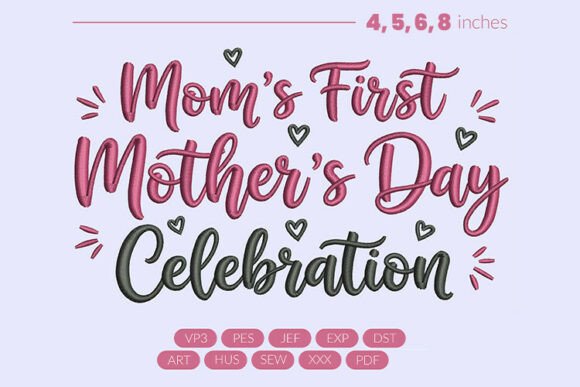
Moms First Mother’s Day Design
First Impressions: A Thoughtful and Elegant Choice
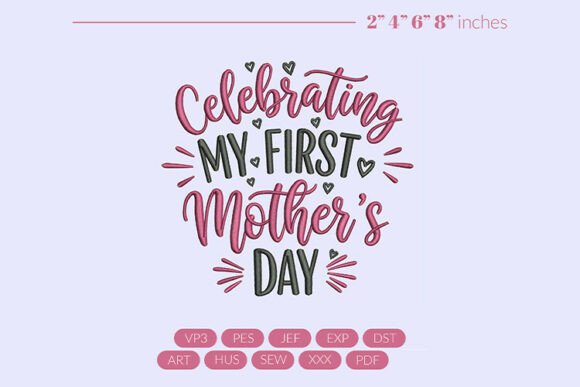
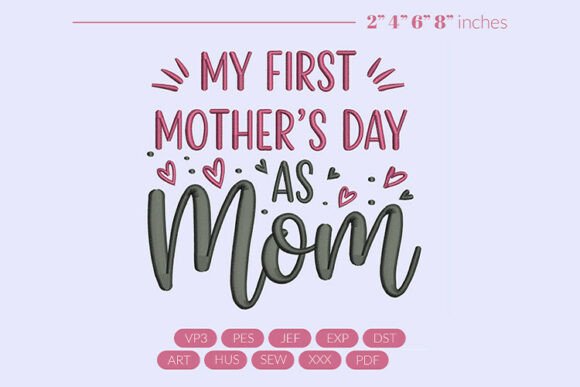
Moms First Mother’s Day Design immediately strikes a balance between elegance and warmth. The elegant script lettering paired with heart accents conveys a sense of celebration and personal significance, making it ideal for meaningful gifts and keepsakes. As an embroidery designer, I find the visual personality to be both professional and heartfelt—perfect for small business merchandise that needs to resonate emotionally while maintaining a polished appearance.
Design Performance in Real Business Use
This design is versatile enough to be used across a range of commercial embroidery applications. From embroidered patches to cap fronts, apron embroidery, tote bag designs, and even product packaging accents, Moms First Mother’s Day Design has the potential to enhance various small business merch items.
- Embroidered Patches: The design works well as a patch, especially when scaled down. The heart accents add a nice touch without overwhelming the overall composition.
- Caps and Hats: It can be applied to cap fronts or as a sleeve detail, offering a subtle yet impactful branding element.
- Aprons and Workwear: The script lettering is legible enough to be used on aprons or work shirts, adding a personal and professional flair.
- Tote Bags and Custom Apparel: The design could serve as a signature mark on tote bags or branded custom apparel, reinforcing brand identity through consistent visual elements.
- Product Packaging: As a small logo or accent, it can elevate the look of product packaging, giving it a more refined and intentional feel.
Its elegant nature makes it suitable for boutique merchandise, customer gifts, and event merch, where emotional connection is key. Whether it's a gift for a new mom or a branded item for a local café, this design adds value through its thoughtful presentation.
Considerations for Careful Use
While the design is visually appealing, there are a few areas where it should be used with caution. For instance, the detailed outlines and textured fabric compatibility may require careful handling when applying it to curved surfaces or small patch sizes. High stitch density can also affect how the design looks at smaller scales, so testing in black and white first is recommended to ensure clarity and readability.
Additionally, the script lettering might be too delicate for high-traffic items like aprons or uniforms that undergo frequent washing. It's important to review thread color contrast and spacing to maintain visibility and quality over time. Using the right stabilizer and hoop size will also help preserve the integrity of the finished product.
Impact on Brand Identity and Customer Trust
Branding is about consistency, and Moms First Mother’s Day Design contributes to a cohesive brand identity. Its elegant and heartfelt nature aligns well with businesses that want to convey care and thoughtfulness in their products. This can build trust and foster customer engagement, particularly in handmade and craft-based industries.
When used consistently across different merchandise, such as caps, tote bags, and product labels, the design reinforces brand recognition. It creates a visual language that customers can associate with your business, making it easier for them to remember and connect with your offerings.
Moreover, the design's ability to be used as a handmade product or branded add-on means it can be adapted to fit both digital embroidery files and physical goods. This flexibility enhances its value as a design asset for small businesses looking to diversify their product lines.
Practical Embroidery Designer Notes
As a professional, I recommend several steps before using Moms First Mother’s Day Design in production:
- Test in Black and White: Ensure the design remains legible and visually appealing without color.
- Check Small Patch Size: Confirm that the design holds up well at reduced dimensions.
- Review Thread Color Contrast: Select colors that provide maximum visibility against the background fabric.
- Inspect Spacing: Make sure the layout allows for proper stitching without overcrowding.
- Confirm Hoop Size: Choose a hoop that accommodates the design without distortion.
- Test on Real Fabric: Evaluate how the design performs on different textures and materials.
- Use Proper Stabilizer: Prevent puckering or shifting during the embroidery process.
- Create a Mockup: Present a printable mockup to clients for approval before production.
- Compare with Other Assets: Ensure the design fits within your existing brand visuals.
- Confirm Commercial Licensing: Verify that you have the necessary rights for business use.
These steps help ensure that the final finished product meets both aesthetic and functional standards, supporting your business goals effectively.